Understand what a virgin ECU really is, how it differs from cloning, which compatibility checks matter and why correct coding is essential for replacement.


Practical guides and tutorials for ECU professionals — reading methods, tooling and checksum.
Understand what a virgin ECU really is, how it differs from cloning, which compatibility checks matter and why correct coding is essential for replacement.

ECU cloning explained: learn how flash, EEPROM, donor compatibility and verified original data enable a safe, legitimate ECU replacement.

Flash vs EEPROM explained for ECU work: understand program flash, data flash, EEPROM emulation, file types and what a complete backup requires.

Remapped ECU checks for used cars: identify hidden tuning, verify software against trusted original data and restore a compatible factory calibration.
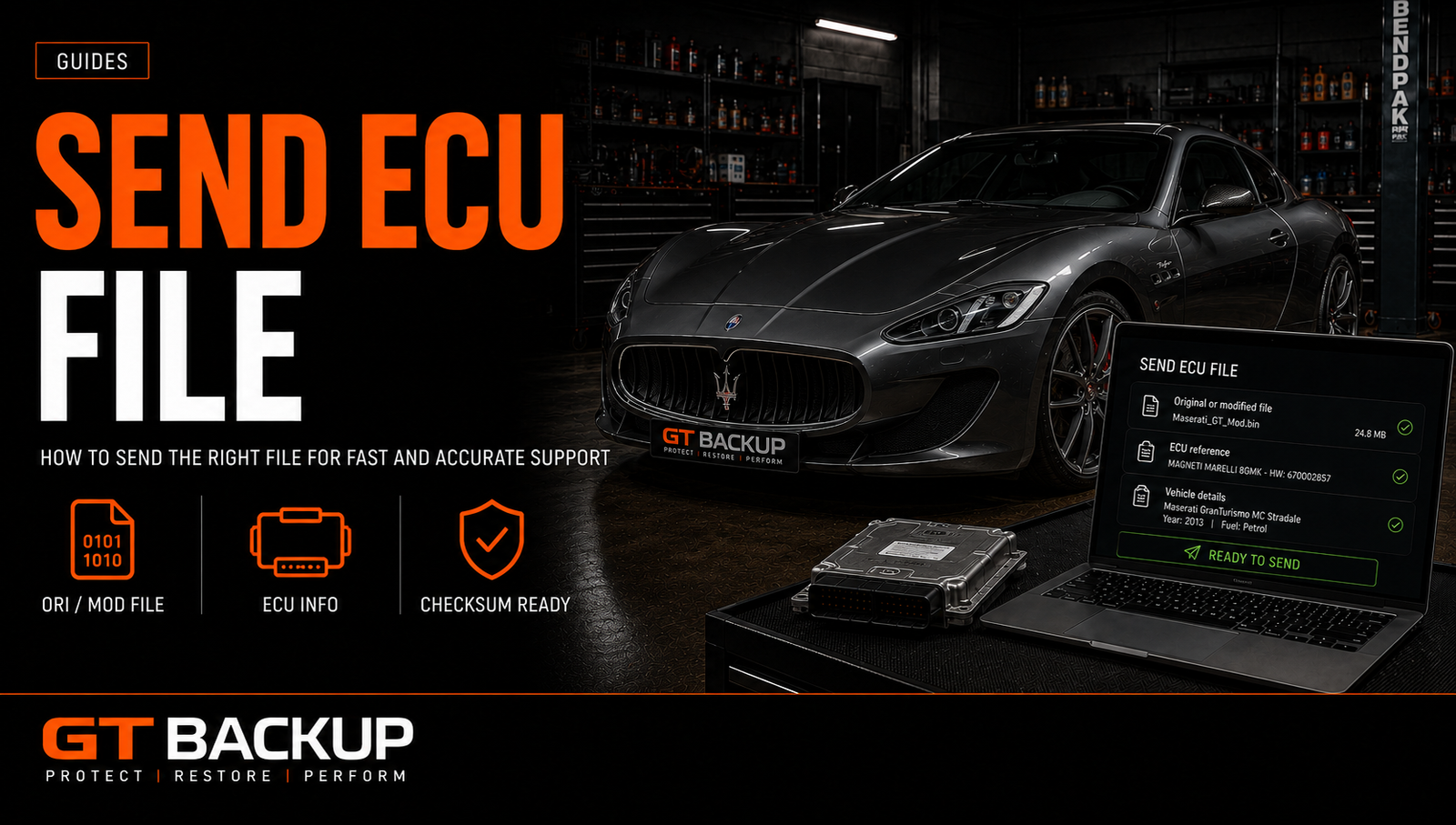
Send ECU file data correctly: identify the controller, choose the proper read type, preserve the original and include complete vehicle and software details.

Engine code identification for ECU work: learn where to find it, how it differs from VIN and ECU numbers, and which references ensure accurate file matching.

GTBackup provides original ECU files, full backups and calibration references for automotive professionals worldwide.
Each file is selected for professional use, with clear ECU references, technical information and instant digital delivery after purchase.
Need a specific ECU file? Our team can help source the right file for repair, cloning or calibration work.