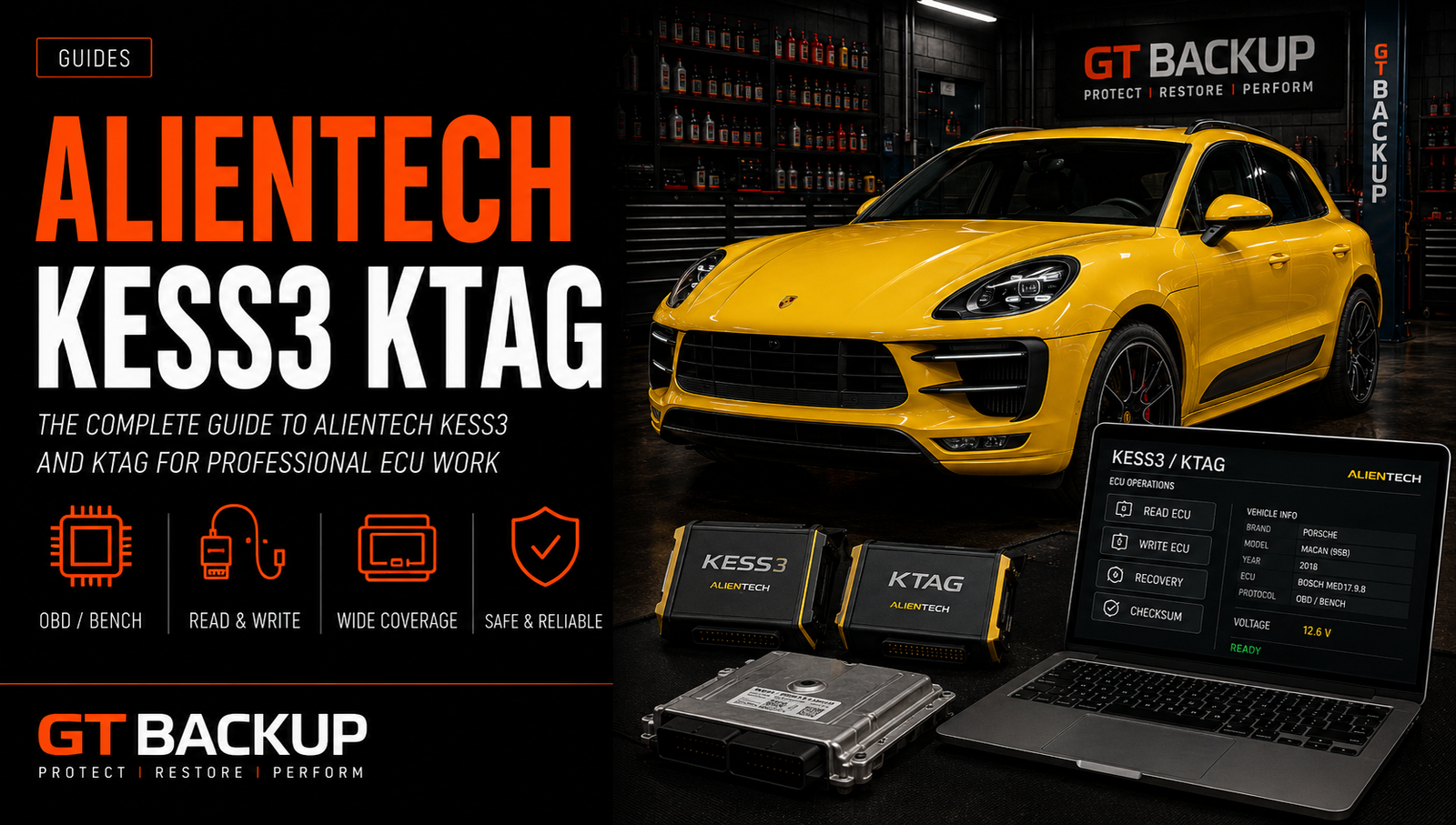
Alientech KESS3 KTAG describes two generations of professional ECU and TCU programming tools from Alientech. KESS3 is the current platform. It combines OBD, Bench and Boot connection modes in one interface and supports selected cars, light commercial vehicles, motorcycles, trucks, tractors, ATVs and marine applications. KTAG remains an important name because it was Alientech’s established Boot and Service Mode tool, but workshops comparing new equipment should understand that KESS3 is now the active all-in-one ecosystem.
What is Alientech KESS3?
KESS3 is a professional control-unit programming tool used to identify, read and write supported ECUs, TCUs, ACMs and other listed controllers. It works through Alientech Suite, which provides guided instructions, protocol information and the available connection modes for each application.
The platform also includes supported DTC functions, DataLogger parameter acquisition and DynoDrive performance testing. These additions can support a workshop workflow, but KESS3 is not a universal dealer diagnostic system. Its primary role remains control-unit programming and related functions.
Alientech KESS3 KTAG: current vs legacy tools
The Alientech KESS3 KTAG comparison covers two different generations. KTAG specialized in Boot and Service Mode work, often requiring a removed ECU and, for Boot access, an opened control unit. KESSv2 handled many OBD operations. KESS3 brought OBD, Bench and Boot into a single current platform.
| Tool | Generation | Main modes | Position today |
|---|---|---|---|
| KESS3 | Current platform | OBD, Bench and Boot | Actively developed through Alientech Suite and current protocols |
| KTAG | Earlier generation | Boot and Service Mode | Legacy tool still encountered in workshops and older documentation |
| KESSv2 | Earlier generation | Primarily OBD | Legacy predecessor to the combined KESS3 workflow |
KTAG files and procedures still matter when supporting existing customers or reviewing an older read. However, KTAG should not be described as a necessary companion to a new KESS3, because KESS3 already includes supported Bench and Boot operations.
Alientech KESS3 connection modes
The correct method depends on the exact vehicle, controller, protocol activation and required memory access.
| Mode | Connection | Typical purpose | Main precautions |
|---|---|---|---|
| OBD | Vehicle diagnostic socket | Identification, virtual or physical reading, and writing without ECU removal | Stable battery voltage, correct vehicle selection and ignition sequence |
| Bench | Directly through the closed control-unit connector | Reading, writing or cloning supported units outside the vehicle | Verified pinout, regulated supply and secure connector contact |
| Boot | Direct access to an opened control unit | Deeper memory access, backup, cloning or recovery where supported | Safe opening, correct probe position and exact instructions |
A faster method is not automatically a better method. One protocol may return a Virtual Read through OBD, while another provides a physical read or additional memory areas in Bench or Boot. Follow the method documented in Alientech Suite for the exact controller.
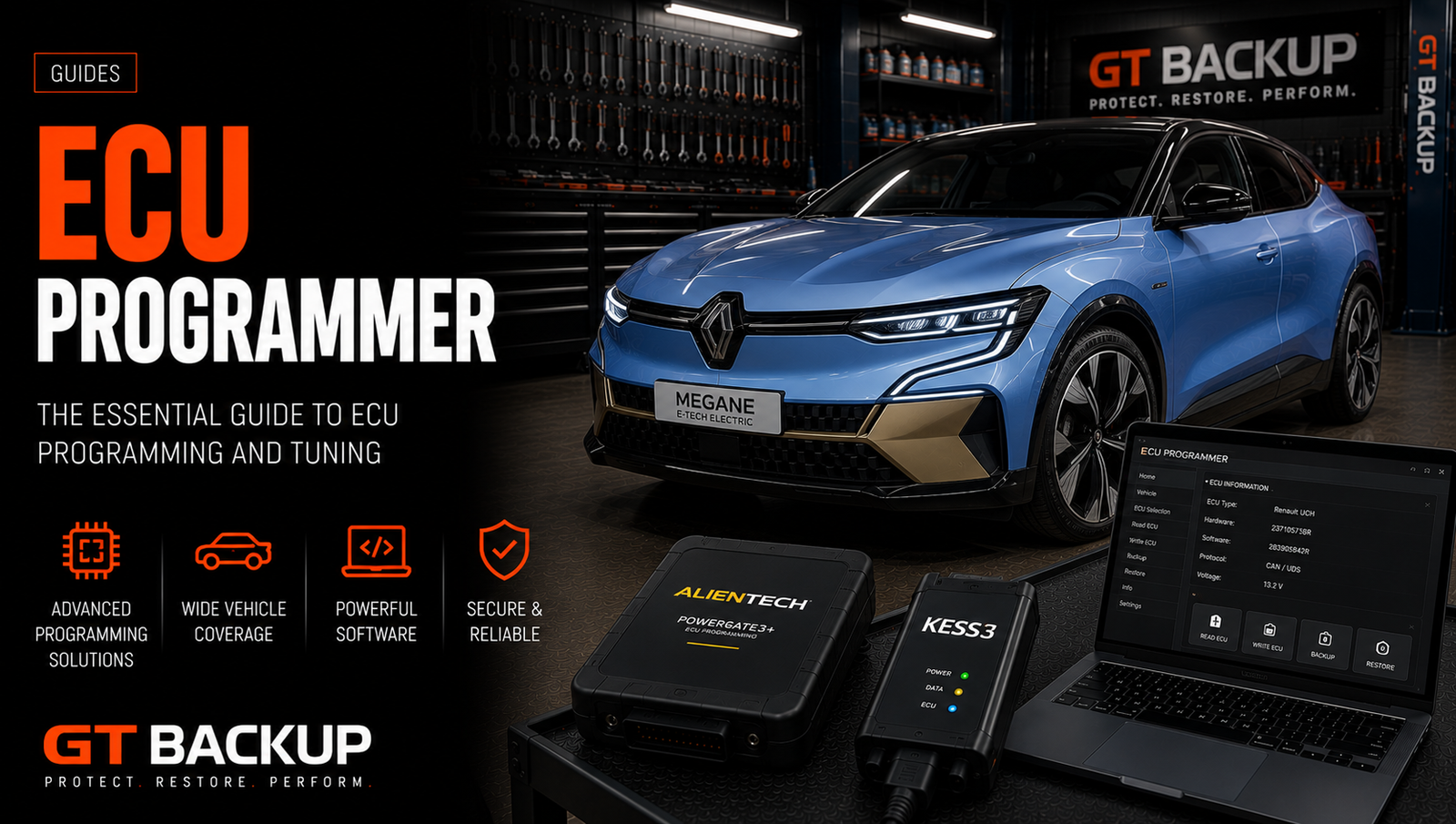
Alientech KESS3 Master vs Slave
The Master or Slave configuration determines who can access and modify the file content.
- KESS3 Master: provides independent access to files returned by supported protocols. The workshop can use suitable calibration software or send the file to a provider of its choice.
- KESS3 Slave: uses encrypted files linked to a designated Master. The Master decrypts, modifies and re-encrypts the file for the Slave workflow.
A Slave tool can make sense for a workshop that wants an established file service, technical guidance and predictable procedures. Before buying, confirm the Master relationship, file prices, turnaround times, recovery assistance and transfer conditions.
A Master configuration offers more independence but also increases responsibility. The user needs calibration competence, validation procedures, appropriate editing software and the ability to support failed or interrupted jobs.
Protocols, activations and subscriptions
KESS3 capability depends on the activations attached to the account. A workshop may need different protocol packages for cars and light commercial vehicles, motorcycles, trucks, tractors or marine applications. OBD and Bench/Boot availability can also differ by category.
Current protocol releases commonly require the relevant activation and an active subscription. Therefore, the hardware price alone does not represent the complete ownership cost. Include subscriptions, cables, adapters, bench equipment, calibration software, training and file services when comparing platforms.
Always check the current Alientech vehicle list and commercial conditions. Package names, coverage and included services can change after an older reseller article or video was published.
ECU, TCU, ACM and UDM coverage
Alientech publishes thousands of protocols across multiple vehicle sectors. However, coverage is controller-specific rather than simply brand-wide. Two vehicles with the same model name can use different ECU families, processors or software versions.
Before accepting a job, search for the exact vehicle and controller. Confirm:
- vehicle category, model, engine and production year;
- ECU, TCU or other controller manufacturer and family;
- supported OBD, Bench or Boot connection;
- available read type and memory areas;
- Master and Slave availability;
- required activation and subscription status.
Alientech KESS3 KTAG files: Virtual Read and backup
A Virtual Read generally supplies an original file matched to the controller identification rather than data physically extracted from the unit. A physical read collects available data directly from the controller. A backup may include microprocessor, flash and EEPROM areas when the selected protocol supports them.
These terms should never be used interchangeably. A calibration file is not necessarily a complete recovery backup. Record the protocol, connection mode, read type, file size, hardware reference and software reference with every saved file.
Do not assume that a file read with one method can be written with another. Use the exact documented workflow and verify that the file matches the controller before programming.
Does KESS3 modify tuning files?
KESS3 reads and writes control units. Calibration editing is a separate task. Alientech offers ECM Titanium as part of its wider ecosystem, while experienced calibrators may use other compatible professional software. Workshops can also send their original reads to a file provider.
A successful read does not guarantee a safe modification. Validation must consider the exact software version, memory layout, requested changes and checksum process. Checksum correction alone cannot prove that a calibration is mechanically suitable or correctly matched.
KESS3 DataLogger, DTC and DynoDrive
DataLogger records supported vehicle parameters and can help a qualified technician compare operating conditions before and after a change. Available channels and sampling depend on the vehicle and protocol.
KESS3 can read and reset supported DTCs directly through Alientech Suite. Fault codes should be diagnosed before clearing; erasing a code does not repair its cause.
DynoDrive uses vehicle data and the integrated GPS system to estimate and compare power and torque during a controlled road test. Results depend on correct configuration and test conditions, and road testing must always comply with local safety rules.
A safe Alientech KESS3 workflow
- Identify the vehicle and controller. Record complete hardware and software references.
- Check official coverage. Select the exact application and verify mode, activation and read type.
- Read the Alientech Suite instructions. Confirm cables, pinout, ignition sequence and recovery notes.
- Stabilize voltage. Use suitable battery support in the vehicle or a regulated, current-limited bench supply.
- Inspect all connections. Verify power, grounds, communication lines, adapters and probes before starting.
- Save the untouched original. Keep redundant copies with the full identification and protocol details.
- Validate the modified file. Check software match, memory structure, requested work and checksum handling.
- Write through the documented mode. Do not interrupt the computer, USB link or power supply.
- Perform post-write checks. Rescan the vehicle and verify normal operation before delivery.
Backups, cloning and recovery
Bench and Boot protocols can support backup and cloning operations on selected controllers. Availability varies, and a clone may require specific memory areas from both the original and replacement units.
Prepare for recovery before writing. Save identification reports, original files and every final version. Never promise that any ECU can be recovered: incorrect pinouts, hardware damage, unstable voltage or an incompatible file can prevent communication entirely.
Who should choose KESS3?
KESS3 can suit independent tuning workshops, ECU and TCU specialists, repair businesses and file-service customers that need multi-brand coverage. It is particularly relevant when a workshop wants OBD, Bench and Boot within one maintained ecosystem rather than separate legacy tools.
The best configuration is based on real jobs, not the largest advertised brand count. List the controllers that generate regular revenue, compare them with current official protocols, and calculate the complete cost of activations, subscription, accessories and technical support.
Common KESS3 and KTAG mistakes
| Mistake | Consequence | Better approach |
|---|---|---|
| Treating KTAG as a required new companion | Confusion about current and legacy platforms | Use KESS3 coverage for new purchasing decisions |
| Buying by brand count | The required controller may remain unsupported | Compare exact ECU and TCU protocols |
| Ignoring subscriptions and activations | Unexpected ownership costs or unavailable updates | Calculate the full multi-year cost |
| Calling every read a full backup | Recovery memory areas may be missing | Confirm the read type and returned memories |
| Programming without regulated power | Interrupted writes and corrupted controllers | Use appropriate voltage support |
Official Alientech information
Use the official Alientech KESS3 page for current platform features. Check the KESS3 vehicle and protocol list before an unfamiliar job, and consult Alientech Suite for the exact connection instructions.
Using KESS3 or KTAG files with GTBackup
GTBackup supplies ECU and TCU files rather than Alientech hardware or subscriptions. When sending a KESS3 or legacy KTAG read, include the untouched file, full controller identification, vehicle details, connection mode, protocol and read type. This lets us distinguish a Virtual Read, physical read, calibration area and complete backup.
Explore our ECU file services or check GTBackup pricing.
Conclusion
The Alientech KESS3 KTAG transition moved workshops from separate legacy tools to the current KESS3 all-in-one workflow. It combines supported OBD, Bench and Boot programming with Master and Slave configurations, DataLogger, DTC functions and DynoDrive. Its real value depends on exact protocol coverage, the correct activations, subscription status and disciplined workshop procedures.